Deep-dive Breathwork Masterclasses
Stop Managing Symptoms.
Start Understanding Systems.
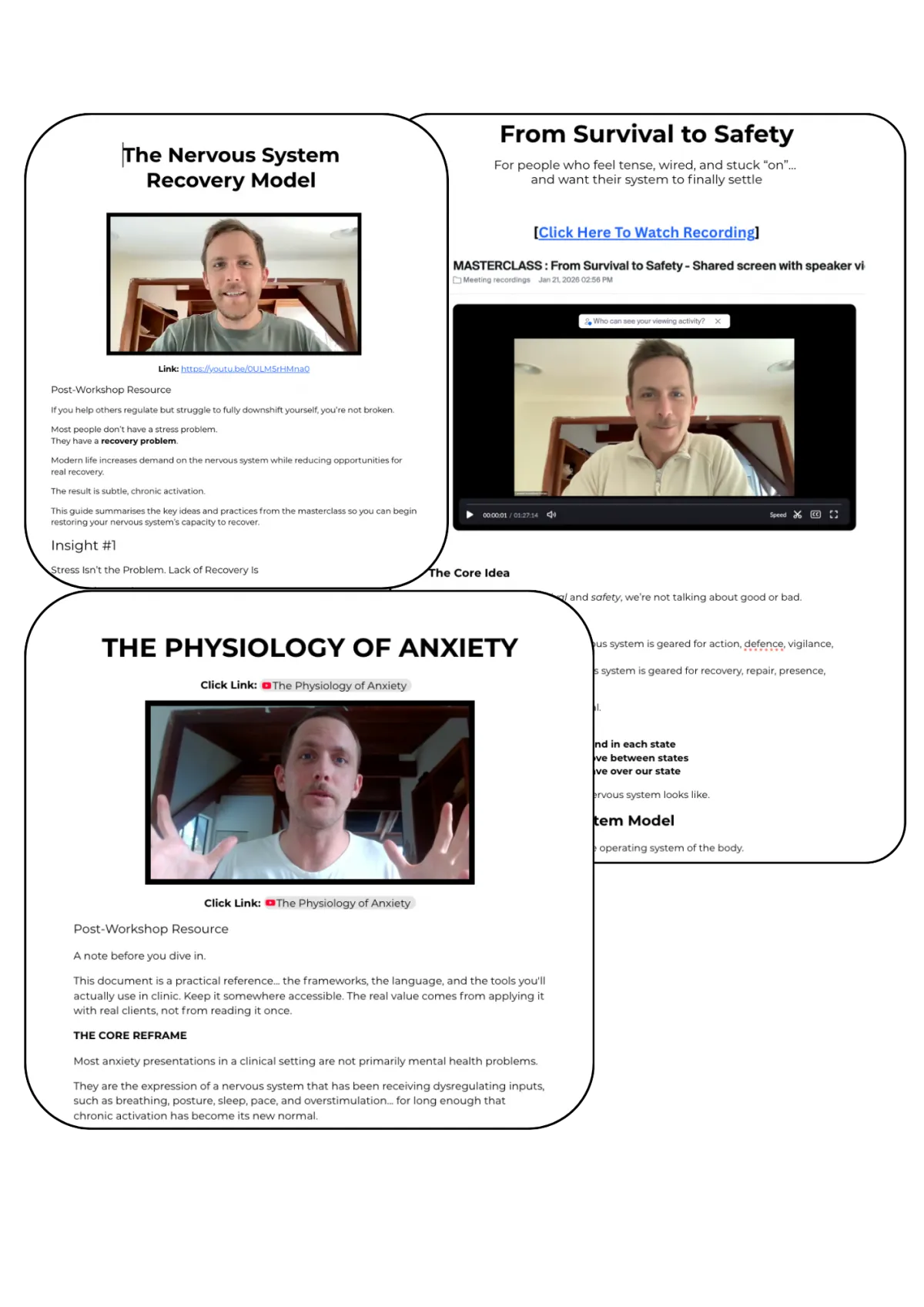
Each masterclass stands on its own,
but together they form something more complete.
Survival to Safety
Gives you the foundational model: what states the nervous system operates in and how to move between them.
The Recovery Model
Builds on that, explaining why so many people stay activated even when they're trying to do all the right things.
The Physiology of Anxiety
Takes that same framework and makes it clinically applicable... showing you how dysregulation presents in the body and what to actually do about it.
Most people who study one end up coming back for the others.
The bundle is simply the most efficient way to build the full picture from the start.
Breathwork and Nervous System Masterclasses
for serious learners or practitioners
From Survival
To Safety
For those feeling tense or stuck and want their system to finally settle.
You will learn:
Why the nervous system gets stuck in survival mode and why willpower alone won't shift it
The difference between state balance, flexibility, & control, and why all 3 matter
How body, breath, beliefs, and behaviour reinforce each other and how to work with all of them
Why safety can feel uncomfortable at first, and what that resistance actually means
Practical tools to begin teaching the nervous system that settling is safe
The Nervous System Recovery Model
Use recovery to restore your (or others) NS and create resilience.
You will learn:
Why most people don't have a stress problem... they have a recovery problem, and the distinction changes everything
How the body, behaviour, and beliefs all contribute to whether recovery is actually possible
The physiology of chronic low-grade activation and how to recognise it in yourself or a client
Practical micro-recovery tools that work within a busy day, not in spite of it
How small, consistent signals reshape nervous system baseline over time
The Physiology
of Anxiety
Improve the conditions you (or others) nervous system is operating in.
You will learn:
How to distinguish clinical anxiety from nervous system dysregulation, and why that line changes your approach entirely
What chronic activation actually looks like in the body: breathing patterns, posture, tissue, behaviour, and history
The 3 core interventions: breathing correction, self-release exercises, and the regulatory conversation
Scope-safe clinical language for discussing these presentations
How to assess, intervene, review, and progress
Most health education stops at symptoms.
These masterclasses go deeper into the physiology, the patterns, and the clinical logic that explain why people stay stuck and how to actually shift that. Each class is built from Campbell's decade of clinical practice and practitioner training.
Whether you're working on your own system or working with clients, this is the framework behind the work.